2019年7月13-14日(rì),第二屆國際柔性電子學(xué)術大會將(jiāng)在杭州舉行。本屆大(dà)會專(zhuān)注(zhù)柔性電子的前沿領域,截止目前,大會邀(yāo)請到(dào)了美國三院院士John A. Rogers教授、Takao Someya教授(shòu)、英國劍橋大學教授George Malliaras、Ming Liu教授(shòu)等21位國(guó)內外頂級專家為大家帶來前瞻(zhān)性學術報告。
此次大會主題將包括但不限於有機柔性電子、柔性顯示、無機柔性電(diàn)子、可延(yán)展電(diàn)子、柔性能源、生物(wù)仿真(zhēn)電子、可重構電子、瞬態電子、生物合成電子、可(kě)穿戴電子和柔性機器人。同時本次大會也是持續(xù)為全球產業界、企業界提供更多了解柔性電子領域(yù)最新(xīn)技術進展(zhǎn)的機會。
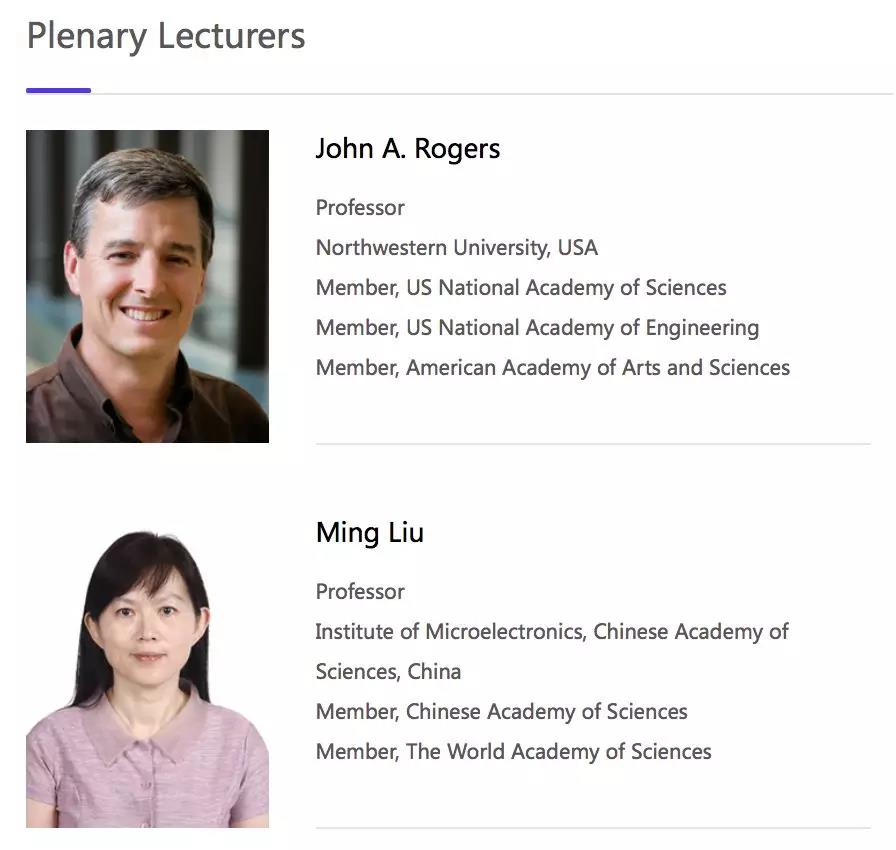
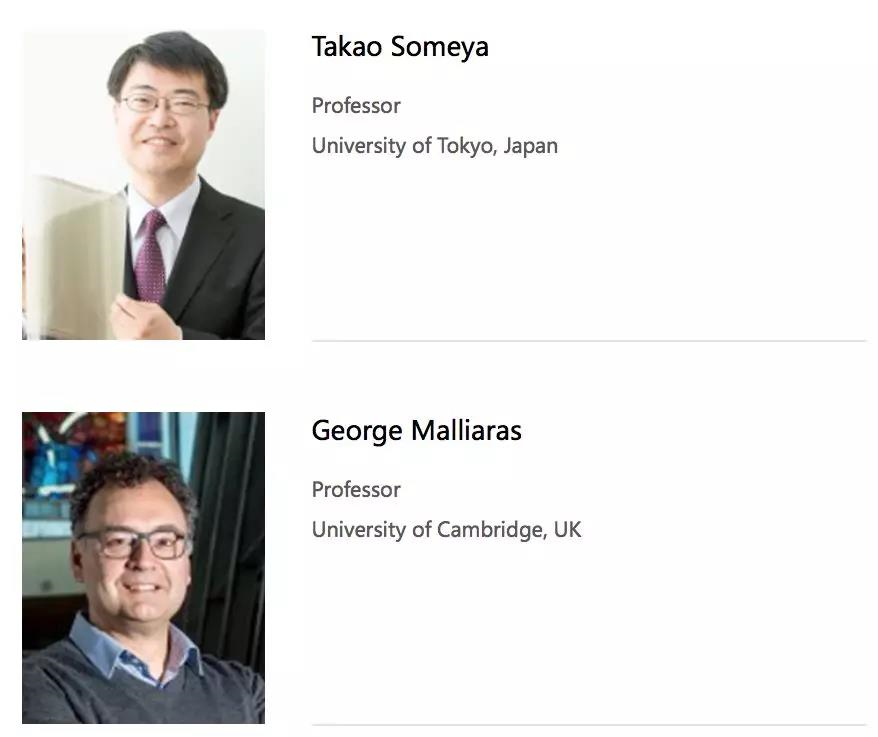
本屆(jiè)大會組委會主席分別是來自清華大學的馮雪教(jiāo)授和美國西北大學黃永剛教授,此外(wài)組委會成員還有清華大(dà)學段煉教授(shòu)、羅毅教授、沈洋教授,浙江大學宋吉舟教授,清華大學(xué)王曉峰副研究員、張一(yī)慧副教授。
參會注(zhù)冊(cè)信息
注冊付款截止時間(jiān) 2019年6月20日
展覽付款截止時間 2019年6月30日
常規(3000 RMB or 500 USD)
學(xué)生(1500 RMB or 250 USD)
詳情請訪(fǎng)問:會議(yì)網站:http://icfe.gfeit.com/
主辦方:
柔性電子技術協同(tóng)創新中心
清華大學柔性電子(zǐ)技術研究中心(xīn)
承辦方:
柔性電子與智能技(jì)術全球(qiú)研究中心
浙江清華柔性電子技術(shù)研究院
會議地址:
國際創博中心(浙江省(shěng)杭州市(shì)錢塘新區科技園路267號)
期待與大家相聚杭州,
共同見證柔性電子即(jí)將為91成人抖音開創的未來時代!
本周人物(wù)
Paul Burn
相對於傳統矽電子,柔(róu)性電子是指可(kě)以彎曲、折(shé)疊(dié)、扭曲、壓縮、拉伸、甚至變形成任意形狀但仍保持高效光電性能、可靠性和集成度的薄膜電子器件。1977年導電聚乙炔的發現,開啟了基於π-共軛體係的有(yǒu)機電子學世界。有(yǒu)機半導體(tǐ)材料以(yǐ)其固有的輕量化、柔軟性、低溫連續加工兼容性和可設計的(de)電子結構等優異特(tè)性,受到了學術界和工業界的廣泛關注。
本周91成人抖音要為大家介紹的是來自澳(ào)大利亞科學院院士Paul Burn教授,作為有機光電子學與電子學中心的負責(zé)人兼聯合主任,他在有機光伏(fú)領域做出了(le)巨大的(de)貢獻。
Paul Burn
Professor
The University of Queensland Fellow,
Australian Academy of Science
ARC Australian Laureate Fellow, Australia
Paul Burn教授在(zài)悉尼大學攻讀博(bó)士學位,之後進入劍橋大學(xué)進行為(wéi)期四年的博士後工作,並在(zài)基督學院擔任三年陶氏研究員。1992年,他在牛津大學(xué)擔任有機化學講師並獲得教學獎學金。自2007年(nián)3月(yuè)至今,他加入(rù)昆士蘭大學化學與分子生(shēng)物科學學院擔任教授,同時擔任ARC聯(lián)合會會員以及昆士蘭大學有機光電子學與電子學中心的負責(zé)人兼聯合主任。
Paul Burn教授的研究主要(yào)圍繞用於平板顯示器、太(tài)陽能電池(chí)、光學開(kāi)關、塑料電子、傳感(gǎn)器和燃料電池等的高科技材料。有機光電子學(xué)與電子學中心的項目主要包括化學合成、物理化學和(hé)材料科學、原型製造和測試等。材料研究主要涉及(jí)的是新合成方法和策略開發以及(jí)理解其中關鍵結構與性質的關係,使其未來在(zài)分子水平上設計材料獲得最佳性能。目前,他的(de)團隊(duì)主要工作方向是有機半導體,它們具有(yǒu)與傳統半導體(tǐ)類似的電子特性,但具有塑料的可加工性(xìng)和靈(líng)活性。
目前(qián),Paul教授已經發表論文380餘篇,累計引用次數達37000,h因子為74。由(yóu)於他優秀的科研工作,被(bèi)評為澳大(dà)利亞科學院院士,成為南京郵電大學名譽教授。
附(fù)Paul Burn英文簡曆:
Paul Burn received his doctor of Philosophy at the University of Sydney. After that, he carried out post-doctoral research at Cambridge University for four years, being the Dow Research Fellow at Christ’s College for three years. In 1992 Paul Burn took up a Lectureship in Organic Chemistry at Oxford University and a Tutorial Fellowship at University College, Oxford. In March 2007 he joined The University of Queensland as an ARC Federation Fellow. Now, he is also the Head and Co-director of the Centre for Organic Photonics & Electronics (COPE).
Paul Burn’s research revolves around high-tech materials that can be used in applications such as flat panel displays, solar cells, optical switches, plastic electronics, sensors, and fuel cells. Projects in the Centre range from synthetic chemistry, through physical chemistry and materials science, to prototype manufacturing and testing. The materials research involves the development of new synthetic methods and strategies, and investigations towards understanding the crucial structure-property relationships in them. This enables him to engineer materials at the molecular level to give optimal performance. Major materials themes are dendrimers, polymers and porphyrins that are comprised of organic and/or inorganic components. In particular the materials his group are interested in are classed as “organic semiconductors” and these have electronic properties similar to traditional semiconductors but the processibility and flexibility of plastics.
Paul Burn has published more than 320 papers that have received over 37,000 citations. His h-index is 74. He is a Fellow of the Australian Academy of Science and became a Honorary Professor (Nanjing University of Posts and Telecommunications, China).
資(zī)料來源(yuán):
https://scmb.uq.edu.au/profile/1203/paul-burn
http://researchers.uq.edu.au/researcher/1786