此次大會主(zhǔ)題將包括但不限於有機柔性電子、柔(róu)性顯示、無機柔性(xìng)電子、可延展電子、柔性能源、生物仿真(zhēn)電子(zǐ)、可重構電子、瞬態電子、生物合成電子、可穿戴電子和柔性機器人。同時(shí)本次大會也是持續為全球產業界、企(qǐ)業界提供更多了解柔性電子領域(yù)最新技術進展的機會。
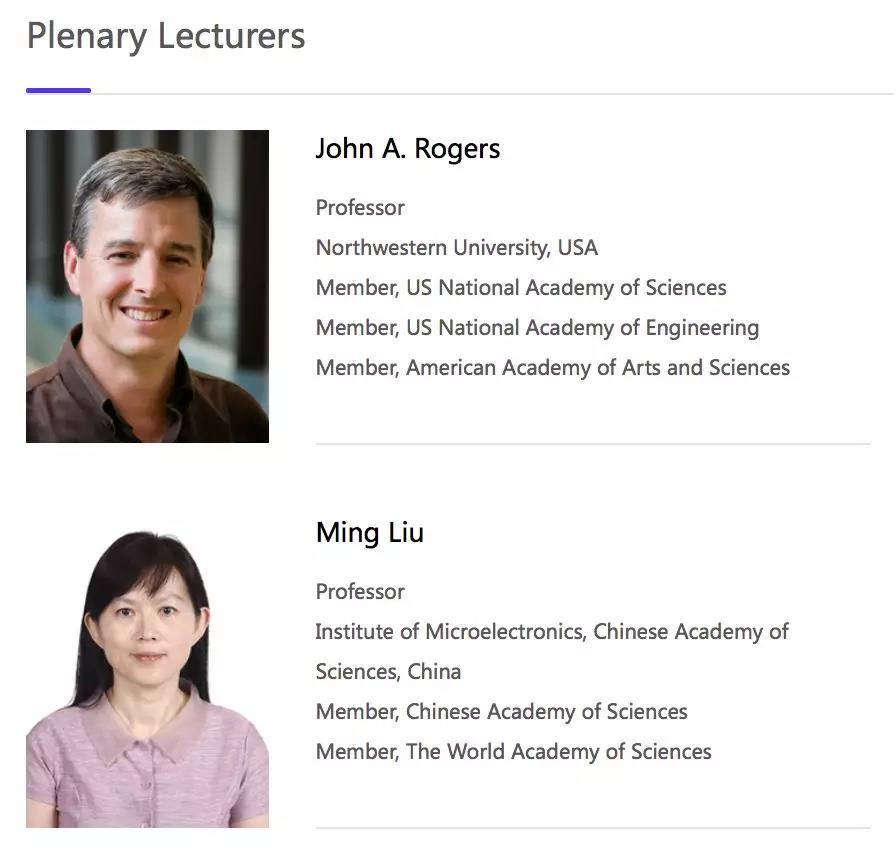
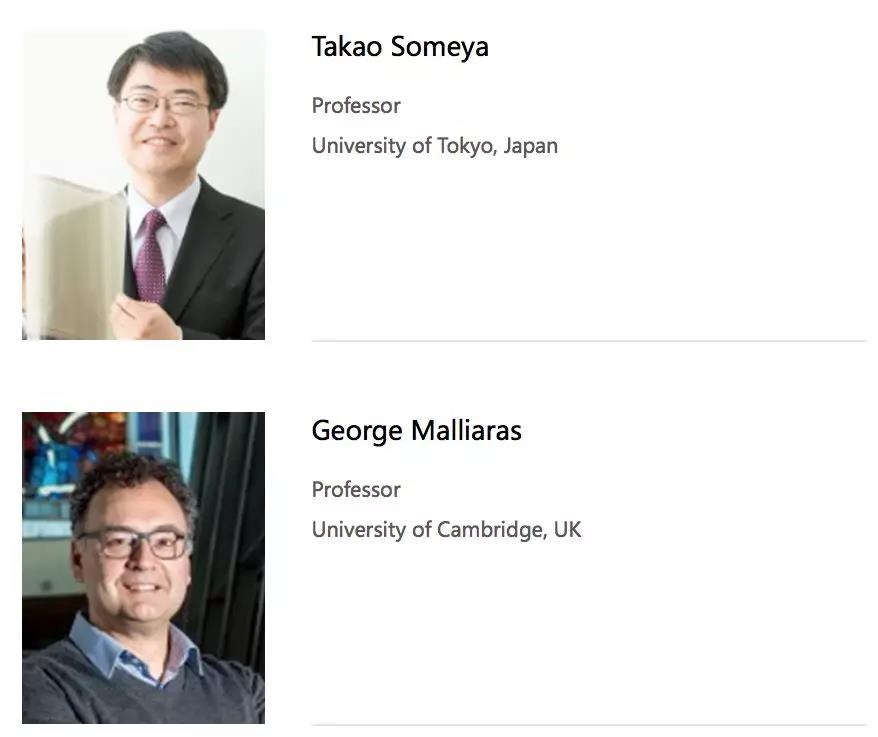
本屆大會組委(wěi)會主席分別是來自清華大學的馮雪教授和美國西北大學黃永剛(gāng)教授,此外組委會成員還有清華大學段煉教授、羅毅教授、沈洋教授(shòu),浙江大學宋吉舟教授(shòu),清華大學王曉峰副研究員、張一慧副教授。
參會注(zhù)冊信息
注冊付款截止(zhǐ)時間 2019年6月20日
展覽付款截止(zhǐ)時間 2019年6月30日
常規(3000 RMB or 500 USD)
學生(1500 RMB or 250 USD)
詳情(qíng)請訪問:會議網站:http://icfe.gfeit.com/
主辦方:
柔性電子技術協(xié)同創新中心
清華大學柔性(xìng)電子技術研究中(zhōng)心
承辦(bàn)方:
柔(róu)性電(diàn)子(zǐ)與智(zhì)能技術全球研究中心
浙江(jiāng)清華柔性電子技術研究院
會議地(dì)址:
國際創博中心(浙江省杭州市(shì)錢塘新區(qū)科技園路267號)
期待(dài)與大家相聚(jù)杭州,
共(gòng)同見證柔性電子即(jí)將為91成人抖音開創的未來時代!
本周人物
Wenlong Cheng
澳大利亞莫納什大學的研(yán)究人員采用(yòng)了一種新的方(fāng)法檢測運動和生命體征,即設計一款具有高度伸縮性、可緊密貼(tiē)合穿(chuān)著者皮膚的(de)極度敏感的彈性傳感器,成功解決了可穿戴傳感器的彎曲和拉伸功能等問(wèn)題。據悉,該穿戴式傳(chuán)感器可用於生物醫學領域(yù)。而該(gāi)研(yán)發成果(guǒ)的(de)領導者就是本周91成人抖音要介紹的Wenlong Cheng教授。
Wenlong Cheng

Professor
Monash University, Australia
程文龍教授,現(xiàn)為澳大利亞莫納什大學化學工程係終身教授。程教授1999年畢業於吉林大學獲得學士學位;2005年,在中科院長春應用化學研究所獲得博士學位;2005-2006年,作為洪堡學者在德國馬普微結構物理所從事科研工作;2006-2010年,在美國康奈爾(ěr)大學生物工程與環境工程(chéng)係從事博士後研究;2010年(nián),加入澳(ào)大利亞墨爾本莫納什(shí)大學。
程教授的研究興趣主要包括納米生物界麵問題、DNA納米技術、納米抗癌治療和電子皮膚等。截止目前,程(chéng)文(wén)龍教授已在包括Nature Nanotechnology、Nature Materials、Nature Communication、Advance Materials、Angewandte Chemie International Edition在內的世界著名(míng)期刊上發表高水平論文一百餘篇,出版多部著作和獲得多項(xiàng)專利授權。程文龍教授分(fèn)別於2003年和2007年獲得中科院(yuàn)院長特別(bié)獎和全國百篇優秀博士獎(jiǎng)。
程文龍教(jiāo)授與其兩位博士,曆時三年研發出了一種可伸縮式的電子皮膚設備——可穿戴“電子皮膚”,並(bìng)為(wéi)其申請了(le)專(zhuān)利。這種新型可穿戴皮膚極為薄軟、韌性強(qiáng),可佩戴或植入人體的任何部位(wèi),能(néng)夠與軟組織的(de)機械性能相匹配,監測到肌肉緊張、血壓、膽固醇、葡萄糖等健(jiàn)康(kāng)指標,並通過(guò)藍牙同步數據到手機等電子設備。“電子皮膚”采用的是一種(zhǒng)韌性(xìng)和耐用(yòng)性都極強(qiáng)的新(xīn)金納米線薄膜(mó),每(měi)條納米線的直徑相當於人類頭發(fā)的千分之一,每片薄膜可拉伸(shēn)至(zhì)其自身的9倍大而不斷裂(liè)。試驗證明,這款可穿戴“電子皮膚”即使在2000次拉伸和高達800%的釋放周期之後,仍可提供93%的數據準確性。
附Wenlong Cheng英文簡介:
Wenlong Cheng is a professor and director of research in the Department of Chemical Engineering at Monash University, Australia. He is also an Ambassador Tech Fellow in Melbourne Centre for Nanofabrication. He earned his PhD from Chinese Academy of Sciences in 2005 and his BS from Jilin University, China in 1999. He held positions in the Max Planck Institute of Microstructure Physics and the Department of Biological and Environmental Engineering of Cornell University before joining the Monash University in 2010. His research interest lies at the Nano-Bio Interface, particularly plasmonic nanomaterials, DNA nanotechnology, nanoparticle anticancer theranostics and electronic skins. He has published more than 100 papers including 3 in Nature Nanotechnology, 1 in Nature Materials and 1 in Nature Comm. He is currently the editor for the Elsevier journal-Inorganic Chemistry Communications, and the editorial board members for a few journals including Cell press journal- iScience.
Professor Cheng’s nanobionics research laboratory focuses on the rational design of nanobionic materials system by combining design rules in microelectronic and biological systems. He enables this concept through a highly interdisciplinary research program across chemistry, biology, material science and microelectronic engineering. The main goals of the nanobionics laboratory is to synthesize function high quality nanocrystals and conjugate them with biomolecules; rationally program synthesis of nanobiomaterials; elucidate the fundamental structure-function relationships; develop adaptive nanobioelectronic devices.
His research group is currently investigating:
•Synthesis of high-quality size and shape-controlled metal nanoparticles and their functionalization by biomolecules such as DNA, towards designing exotic smart metamaterials.
•Plasmonic nanoparticles for cancer diagnostics and therapeutics. Isogentic health/tumor cell lines have been successfully used for synthesizing tumor cell-specific DNA aptamers, the aptamer-conjugated gold nanoparticles could target cancel cells and enhance tumor cell killing upon light illumination.
•Nano-enabled wearable biomedical diagnostic tools for monitoring key health information anytime anywhere. Ultrathin gold and copper nanowires have been successfully used to synthesize unique electronic skin materials which were then used to fabricate wearable sensors for real-time monitoring wrist pulses, tendon movement, skin/muscle health, etc.
資料來源:
http://users.monash.edu.au/~wenlongc/